

The wines are exquisite, and each of the various Marienburg parcels is different: they shimmer aromatically, are alluring and profound, intense yet streamlined. Truly one of the Mosel’s best. — Anne Krebiehl MW, Vinous Media
The wines are authentic, expressive and have an inimitable identity that represents the particular origin of which the terraced parts with the often ungrafted vines can give unforgettable drinking experience (Fahrlay Terrassen, Felsterrasse, Raffes). These are not wines to enjoy quickly or even thoughtlessly. I'd rather recommend to drink them slowly, not too cool and with all the time they need and you are ready to give them. — Stephan Reinhardt, The Wine Advocate
People |
Rita & Clemens Busch

Focus |
Stalwarts of biodynamic farming, natural wine making, bottling single vineyard, single soil type Riesling. Mostly dry, with some outstanding sweeter wines.
Country |
Germany

Region |
Mosel
Sub Region/Village |
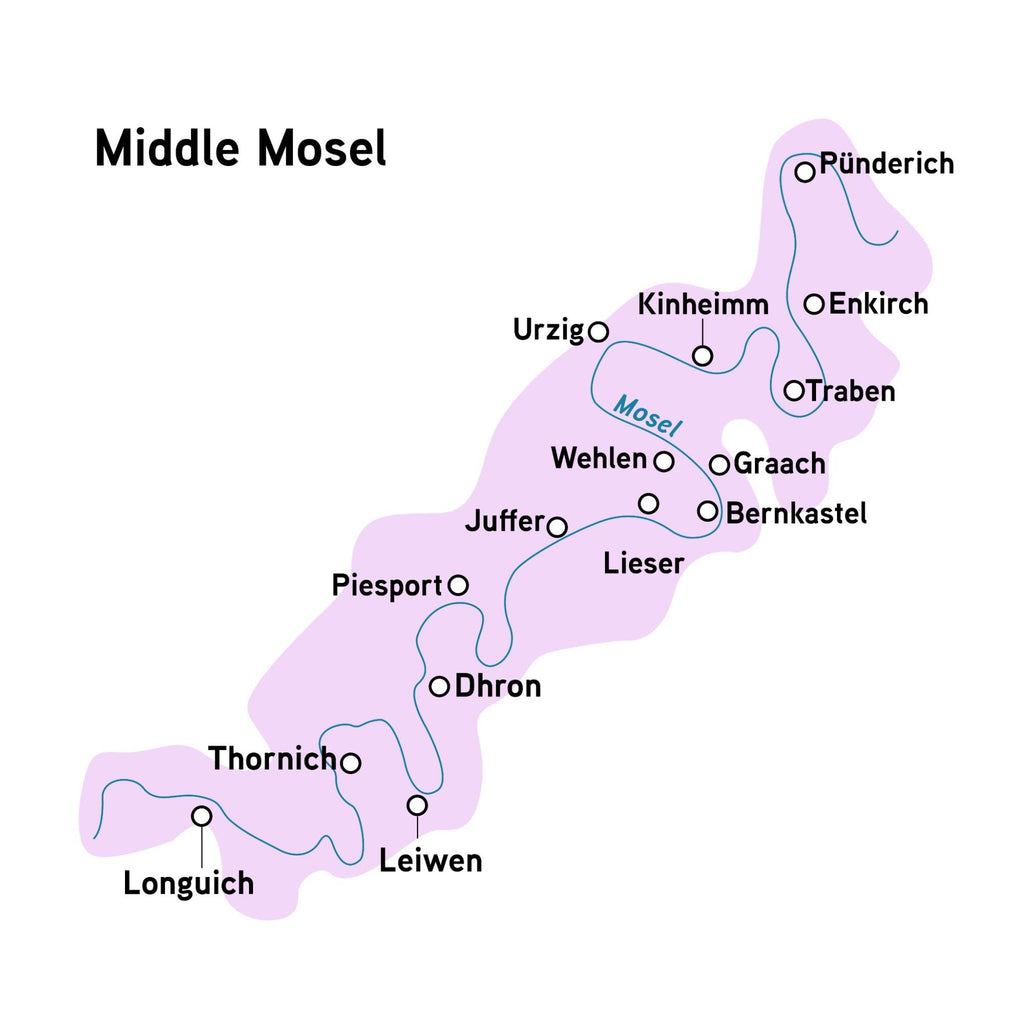
Punderich, at the border between the Middle and the Lower/Terrassen Mosel
Climate |
Cool Continental
Vineyards |
- Marienburg, named as such in with the 1971 wine law, lumping together 90 hectares of steep and flat sites of many soil types. Clemens has spent decades re-delineating the single vineyard names of old. He started with 2 hectares from his father in 1975 and now farms 18.

- Felsterrasse: 70 + year old vines, single staked in light gray slate with bands of iron. Reportedly this is Clemens favorite single vineyard. Needs time in the bottle.

- Fahrlay: the only blue slate parcel, imparting raging acidity, floral notes and concentration to age for decades.

- Rothenpfad: Red slate. A geologic formation of iron- and copper-rich red-colored rock that starts in the Saar (see Niedermenniger vineyards in Stefan Müller), pops up at the Ürziger Würzgarten (Merkelbach), Erdener Prälat and Enkircher Steffensberg (Immich Batterieberg, Vollenweider & Weiser Künstler) sites in the Middle Mosel, and ends at Pünderich. Signature spicy kick, exotic and ripe.

- Falkenlay: 65-90 year old ungrafted vines planted on gray slate. Ginger, ripe and saline. Lends itself to long term aging.

- Raffes: A section of the Falkenlay vineyard where the vines are sheltered from the wine, gain more ripeness and produce the deepest most concentrated wines at the estate.
Grape Varieties |
Riesling
Farming |
Biodynamic
- Clemens took over the conventionally farmed estate in 1975
- Stopped using herbicides in 1976
- He and Rita converted to organics in 1986
- Certified biodynamic by the EU and Respekt in 2005
- They are role models for biodynamic farmers around the world

Cellar Work |
Natural
- The master interpreter of natural wine in Germany
- Light skin contact, for some tannic grip
About the winery |
Clemens, the 5th of his name, along with wife Rita, are stalwarts of biodynamics and natural wine making, a rarity in the Mosel. Situated on the dividing line between the middle and lower Mosel, they've single handedly regained recognition for their home vineyard, Marienberg.
The Marienberg was collateral damage of German bureaucracy in 1971. Its 23 hectares were expanded to include 91 hectares, including flat land across the river, and its reputation quickly faded. Clemens and Rita have spent a lifetime teasing out the once recognized parcels and applying their lost names.
Red, gray and blue slate snake through the vineyard. Each bottle, besides being a single vineyard, is further divided by slate type with a corresponding capsule to indicate which color it was grown on.
These are wines for people who believe in connecting with nature, a sense of place, tradition, striving for excellence, acid and minerality.
What do the wines taste like?
These are powerful wines, destined for long lives and almost all are vinified totally dry. Each show shows a huge variety of flavors and textures, with the only difference in the wines being the site they come from.
They can be pungent and exotic with, with pronounced ripeness and great staying power. Intense enough for white wine for red meat. Or Firm, vivid, gingery, with saline with acidity that elevates to a quiveringly “alive” state of being. The luster, florality, sizzling acids center minerality above all else.